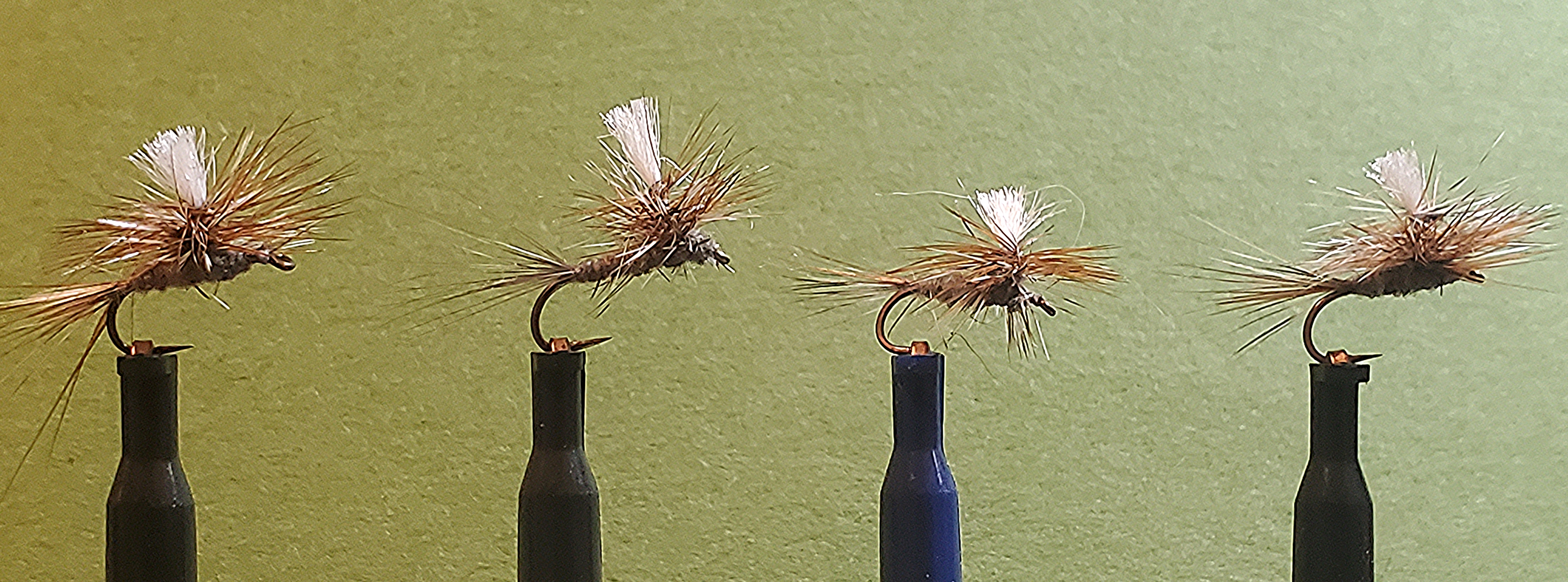
Parachute Adams

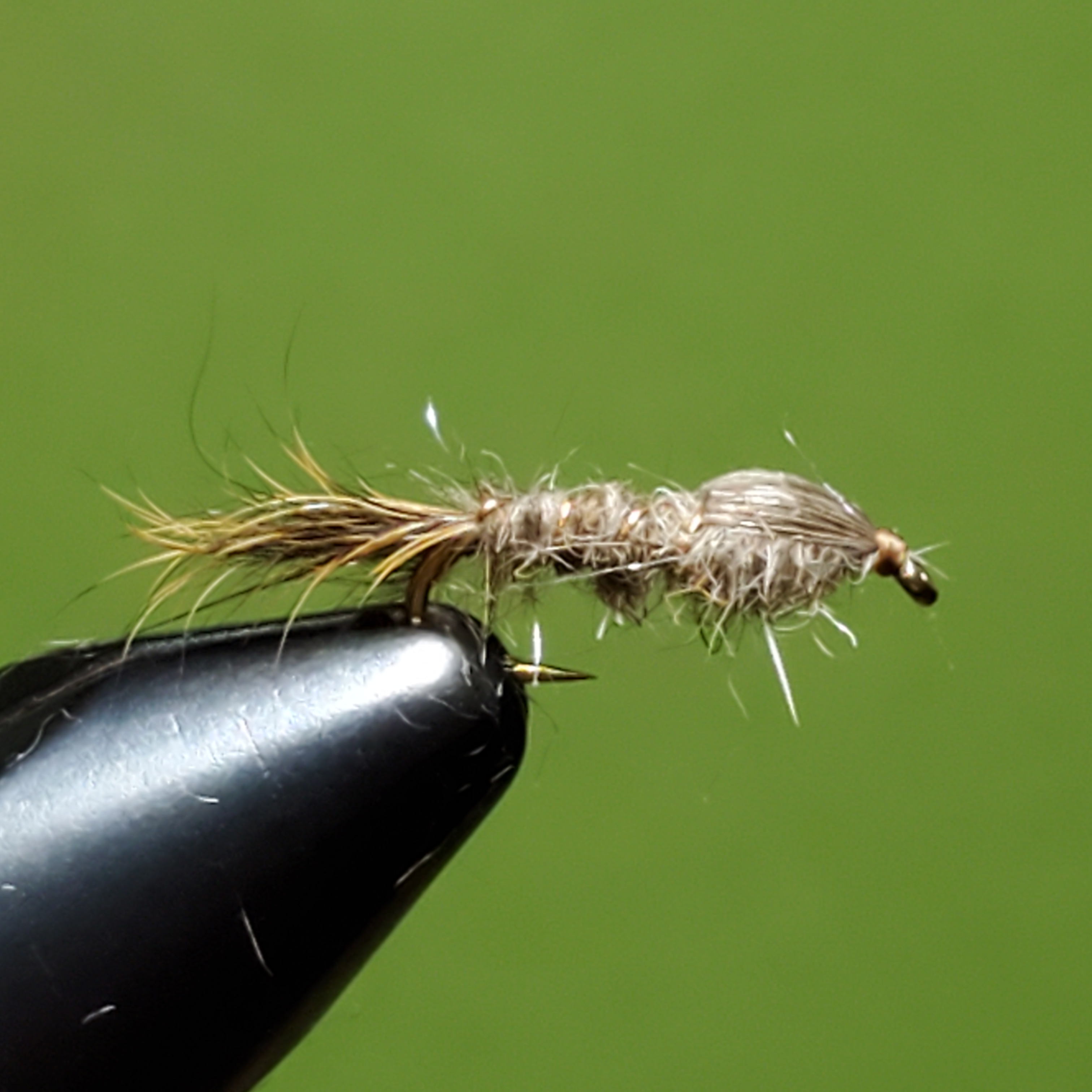
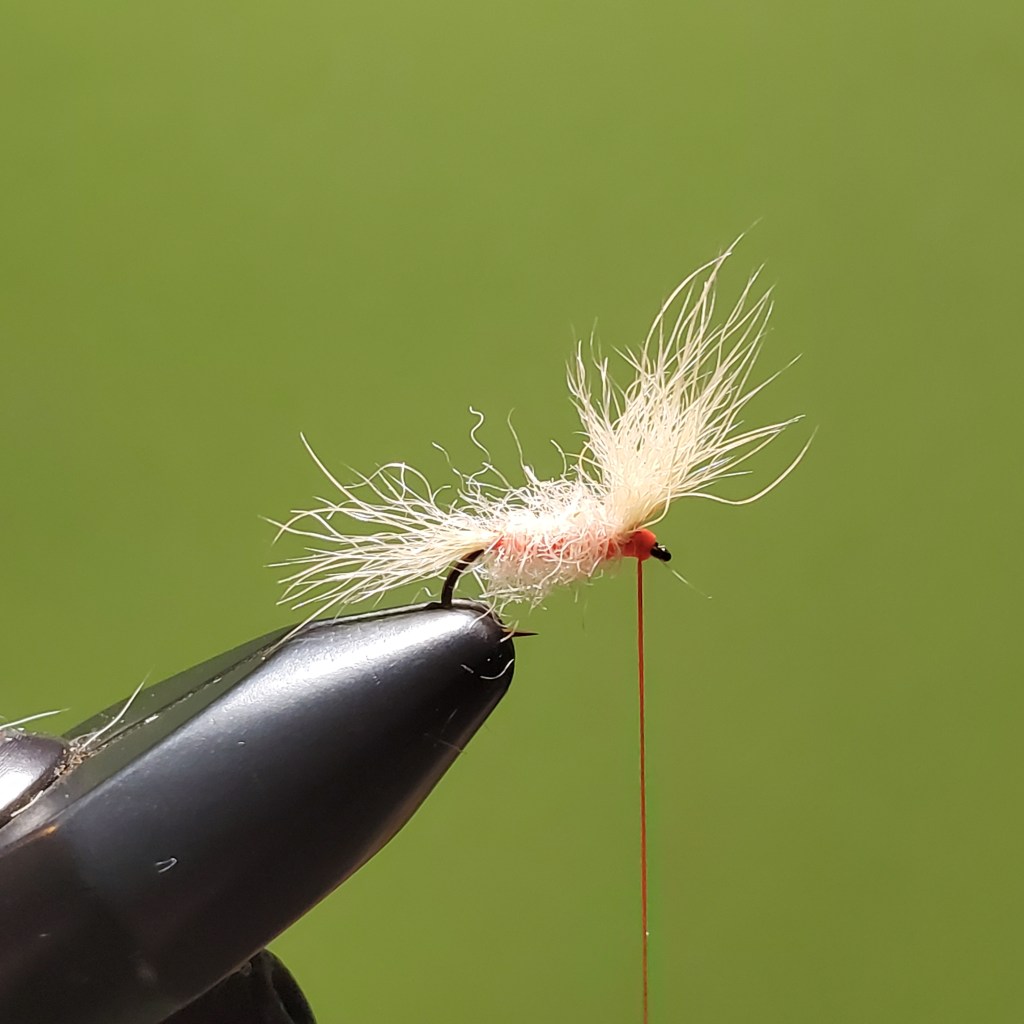
The Adams dry fly is a very popular dry fly. As a matter of fact, it is the best-selling fly worldwide. The parachute version is a few percentage points higher in popularity. It is considered a general imitation of an adult mayfly, flying caddis, or midge. It can be used to imitate a lot of different bugs by changing up the size. The parachute fly sits lower in the water than the traditional hackled tie. To a hungry trout, it looks like an easy meal stuck in the surface film of the water.

I find this style fly a bit difficult to tie. Probably because I don’t tie it often. I find it cumbersome to make the wing post. These are size 16 with a combination of brown and badger hackles for the parachute and tail. All these flies will fish. As you can see none of these will be mounted in a shadow box frame and displayed on my office wall. I tie to fish, not decorate so it’s all good.
Damsels Flies

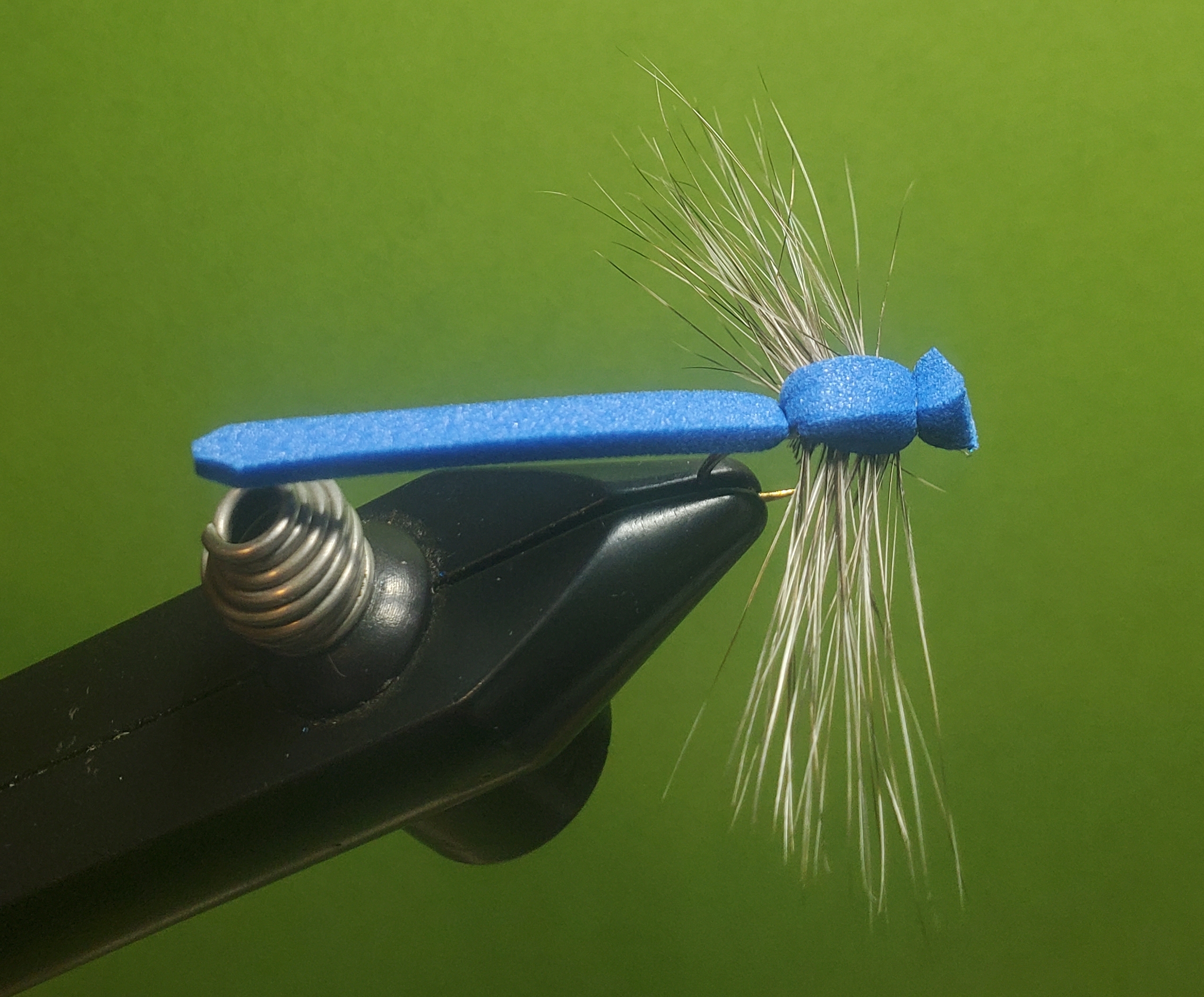
I like tying simple flies. I lose a lot of flies when I fish. So spending more than a few minutes tying a fly and then losing it on my first cast is just too frustrating.

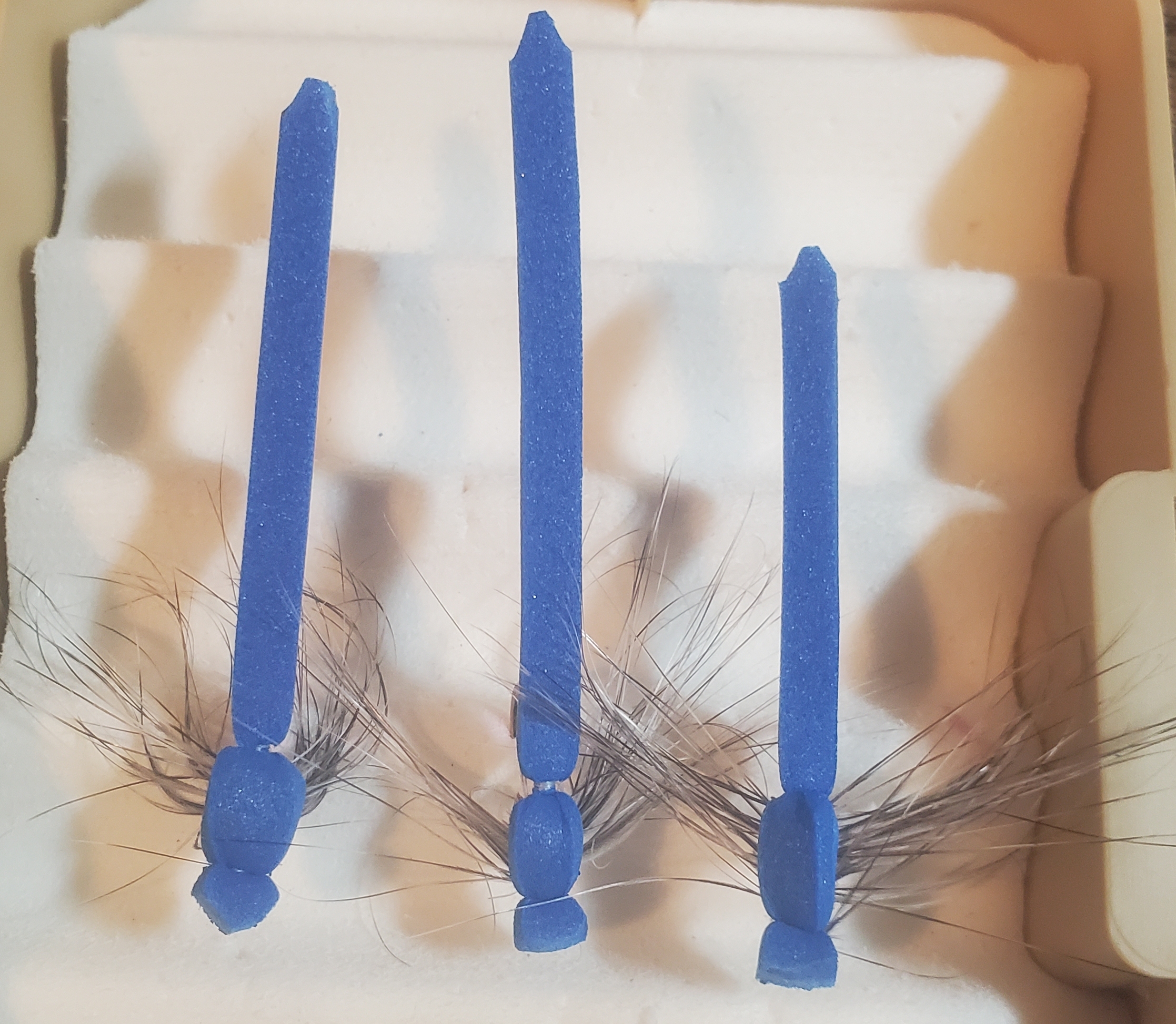
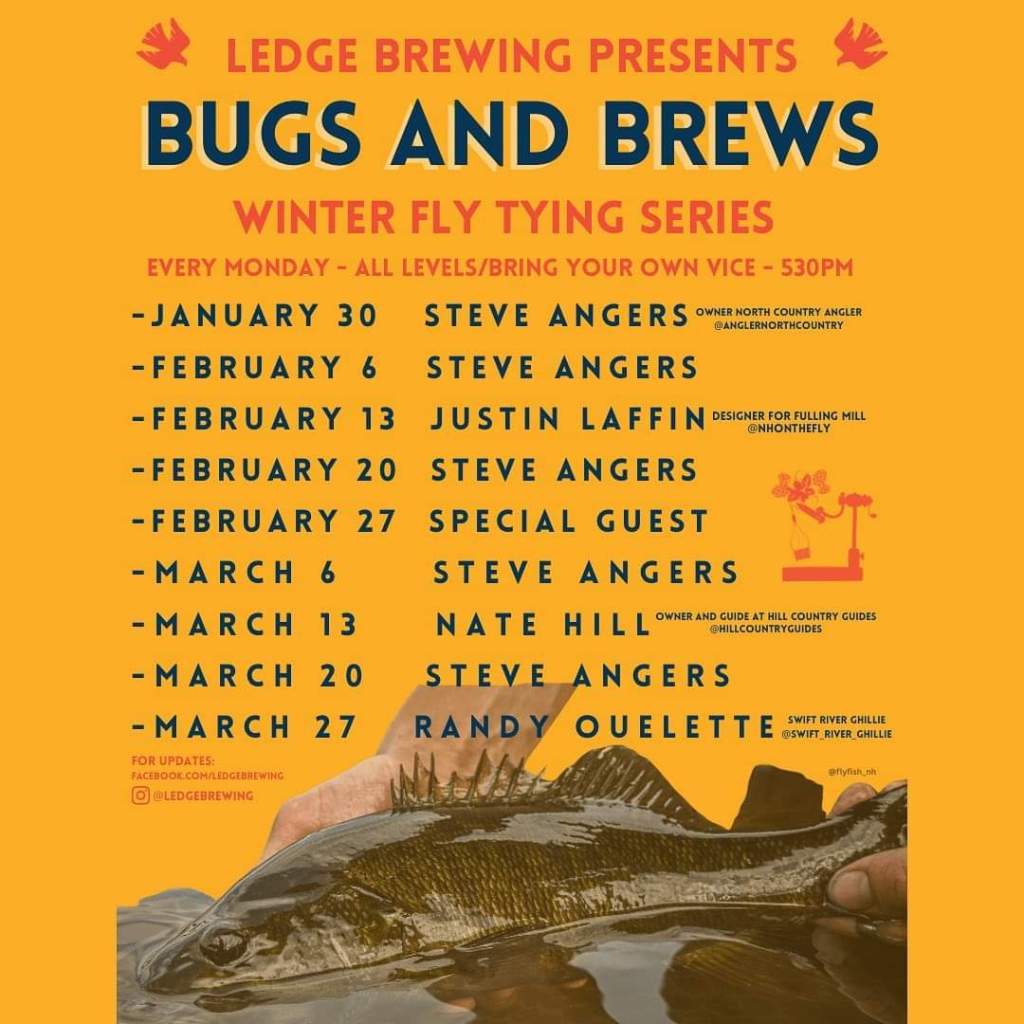
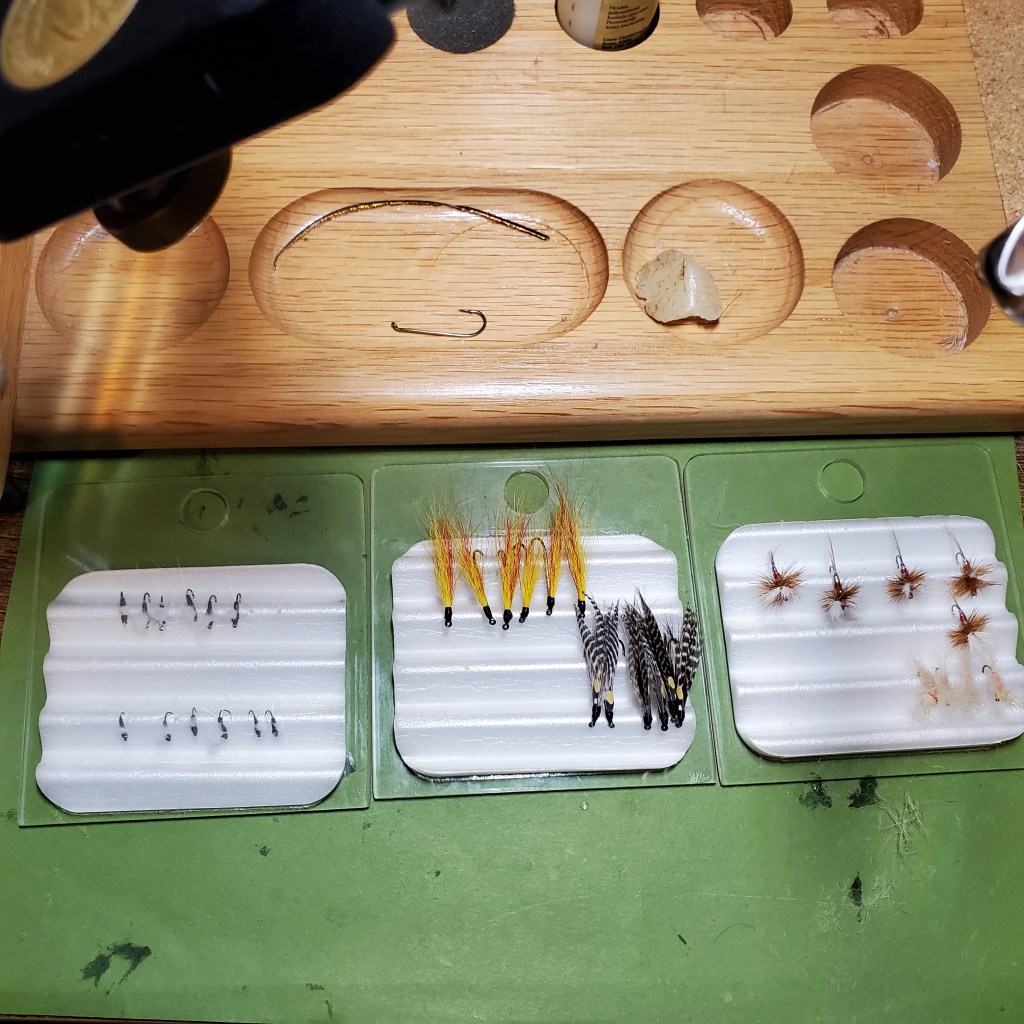
I was very happy that Steve Anger from North Country Angler, taught this simple and fast damsel fly dry last night at “Bugs and Brews”. Two materials some craft foam and a large grizzly hackle.

The pictured flies are a size 14 for brook trout in the local mountain ponds. I think if I vary the sizes, They will work for brook trout in small sizes and larger sizes for Bass.

Spring Fever?

Here I am suffering from a bit of Spring Fever. I’m reading nothing but fishing literature, tying flies, and buying equipment in preparation for spring fishing. People from New Jersey are posting pictures of all the trout they are catching.

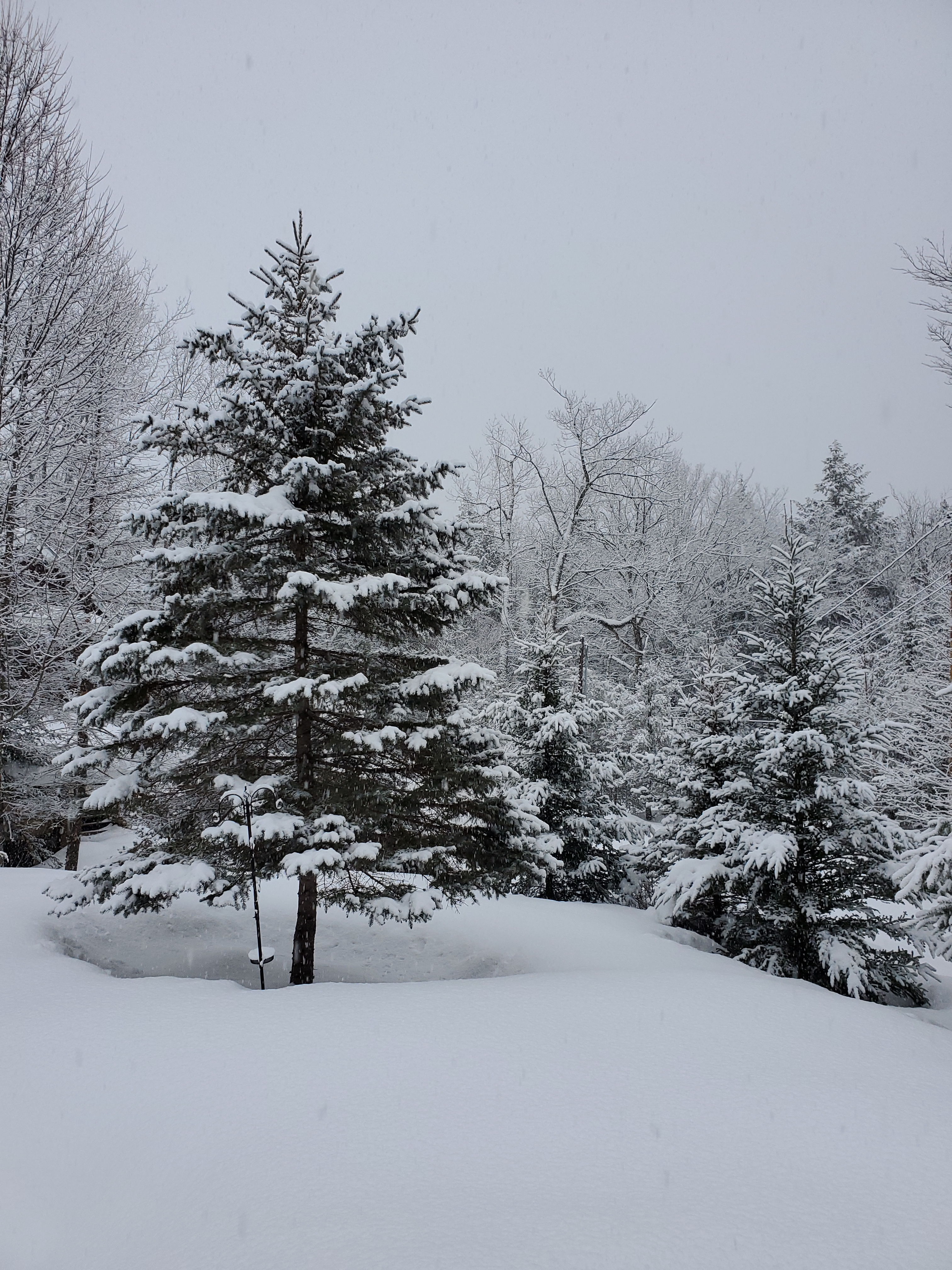
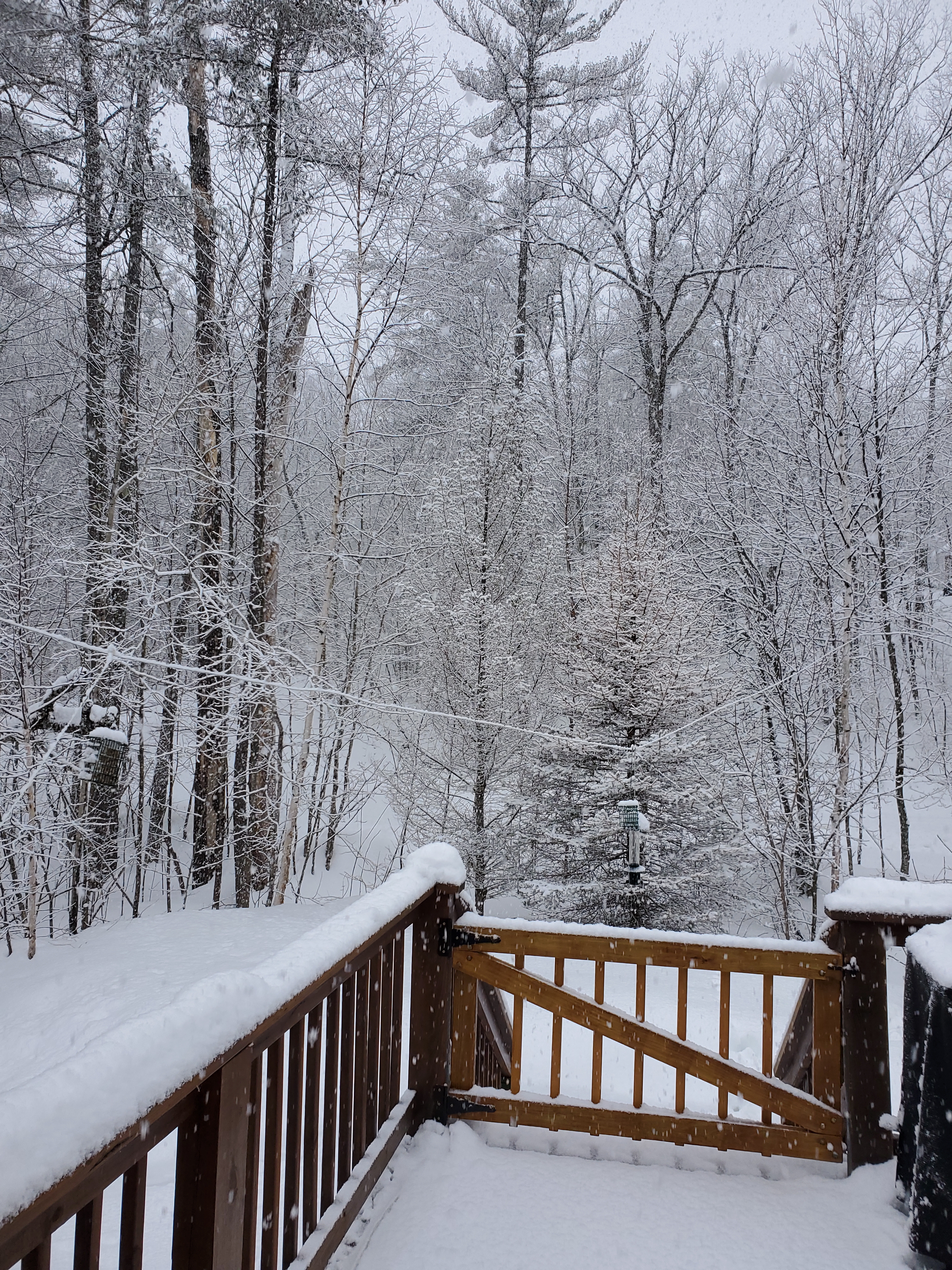
I woke up this morning to another snowy morning. We had 12+ inches on Monday and a forecast for another 10 inches Friday into Saturday. Mother Nature has waited until the end of winter to hit us with all the snow. I really am thinking of strapping on my snow shoes so that I can get to the river to swing some streamers.

Soft Hackle Streamers

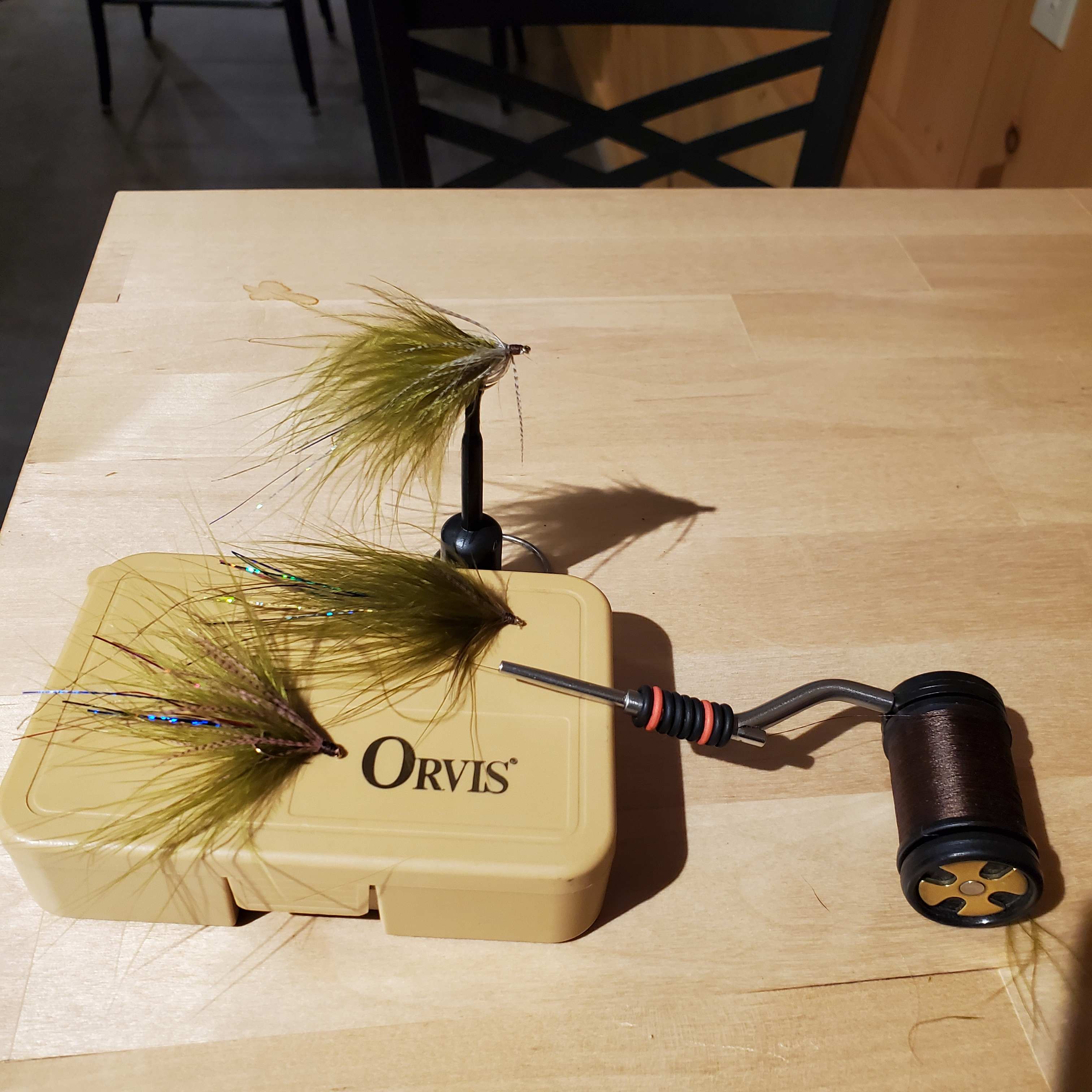
Here is another sample of what we tied at Bugs and Brews. Steve Angers from North Country Angler led the class, and we tied a Jack Gartside Soft Hackle Streamer. We tied this pattern before we tied the Game Changer, which is also tied in the round. I am really enjoying these streamers tied in the round. I had become so stuck tying traditional streamers with a tinsel body and a hair wing, like the Black Nose Dace and Mickey Finn. The Soft Hackle Streamer is a much easier fly to tie than the Game Changer. I think I will tie a bunch up in different colors and sizes to fill my boxes.

Game Changer

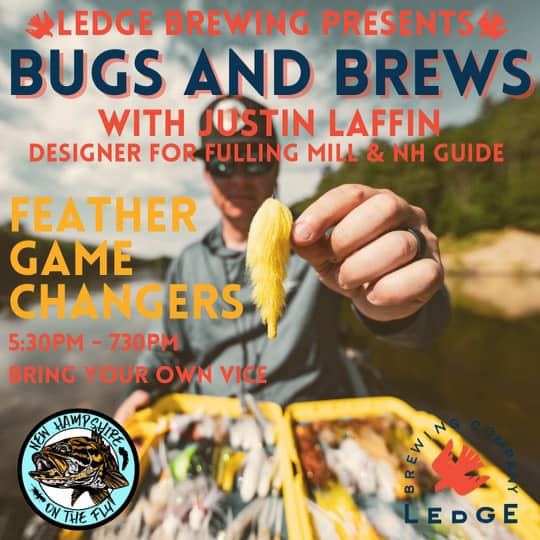
At the Monday Night “Bugs and Brews” at Ledge Brewery here in Intervale, we learn to tie a fly pattern based on the “Game Changer” Justin Laffin a local guide in southern New Hampshire, walked us through his version of the pattern. It is a complicated fly only because there are so many sections and steps. However, the steps are just repeated so once you know the routine it’s not that difficult. I don’t know whether I’ll tie this fly on a regular basis but it certainly was fun to learn to tie it.

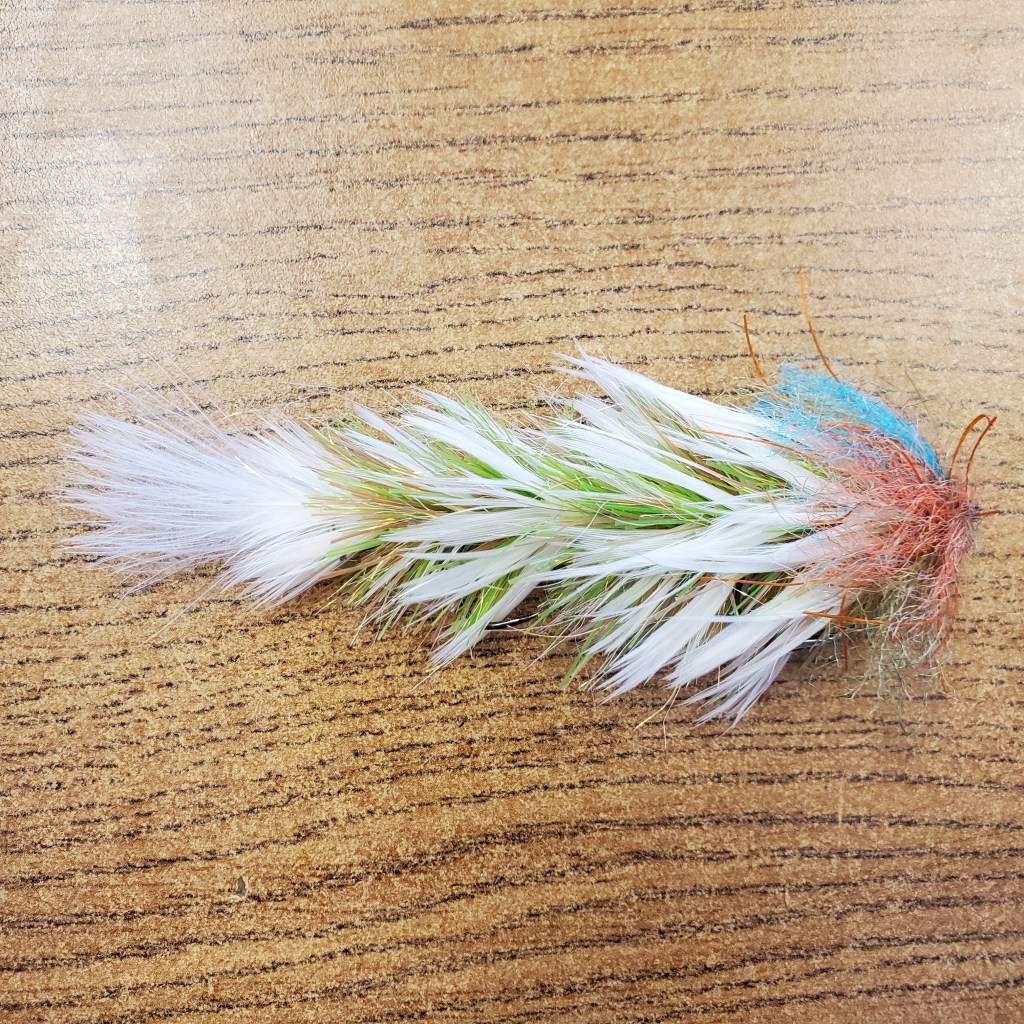
The original “Game Changer” was first tied by Blane Chocklett. It is an articulating streamer pattern. Basically, when you tie this pattern it’s four separate flies hooked together with shank sections. Two hooks and two shank sections. It has become more of a style of fly rather than a single pattern. My example here is a bit rough but I got the idea. In a mini version in olive and brown should match the small bait fish in my local mountain streams.

Just filling my boxes.

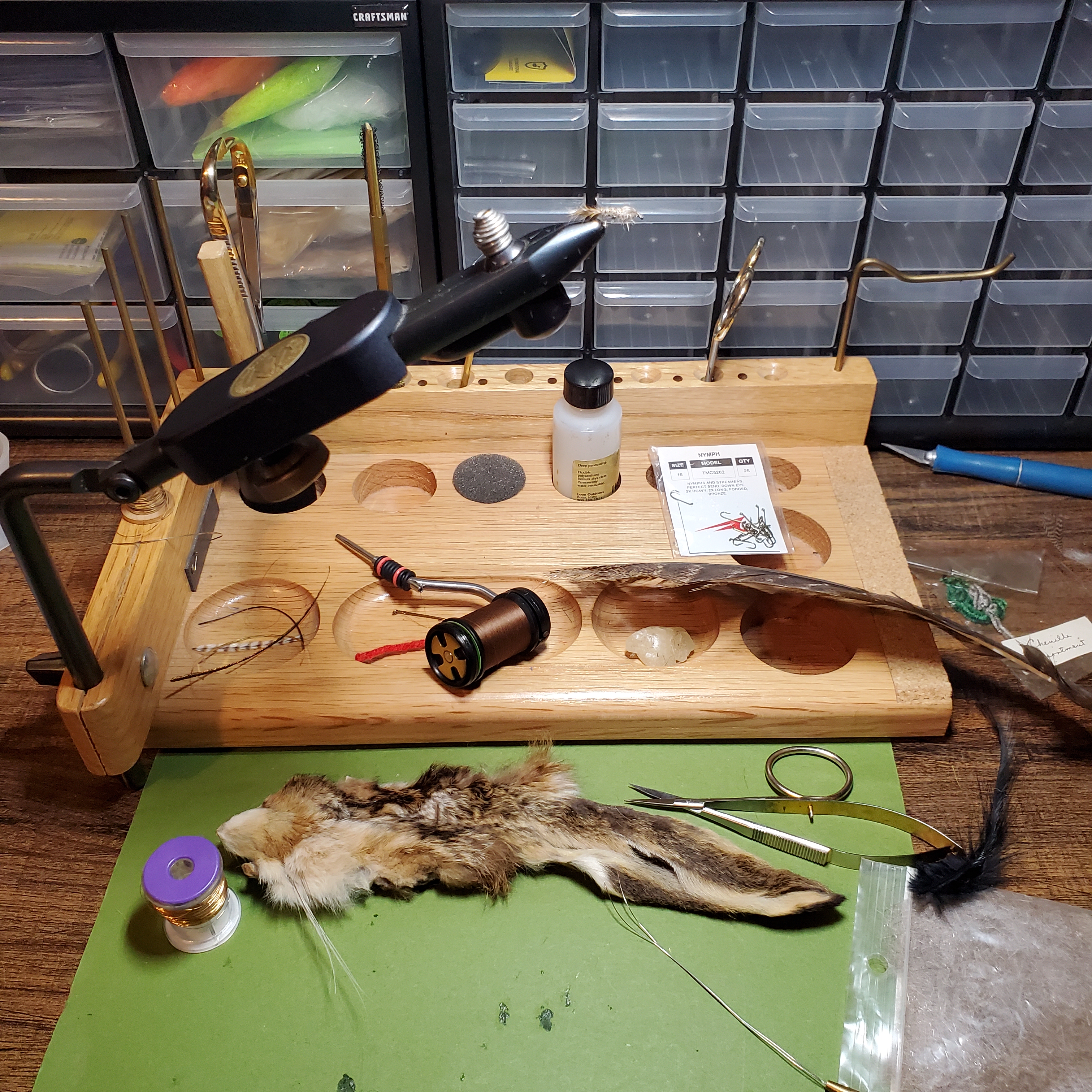
What to do on a cold winter afternoon. Well, I tie flies. I need to fill up the fly boxes for spring. Today I am tying some traditional Gold ribbed hares ear nymphs. In a size 16. I stick to the original recipe except that I use gold wire in place of gold fine tinsel. You do see the wire much until the fly gets wet, but I think it is more durable. I will tie a few of these then maybe a few Prince nymphs or Zug bugs.

Winter Flies

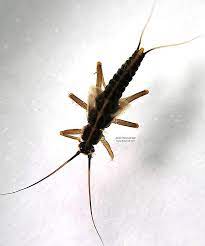
One of the first flies you will see on a trout stream in winter is little black stoneflies. They will crawl out of the water onto a streamside rock in the frigid air. Their dark bodies will absorb heat from the sun and allow this little bug to shed their juvenile skin. Sometimes you can see the small adult stone flies walking around on the white snow. Trout don’t pay much attention to the adults as they are never in the water. The tiny nymph gets the hungry trout’s attention as they migrate along the stream bottom to the streamside rocks. Getting knocked free and tumbling in the current.

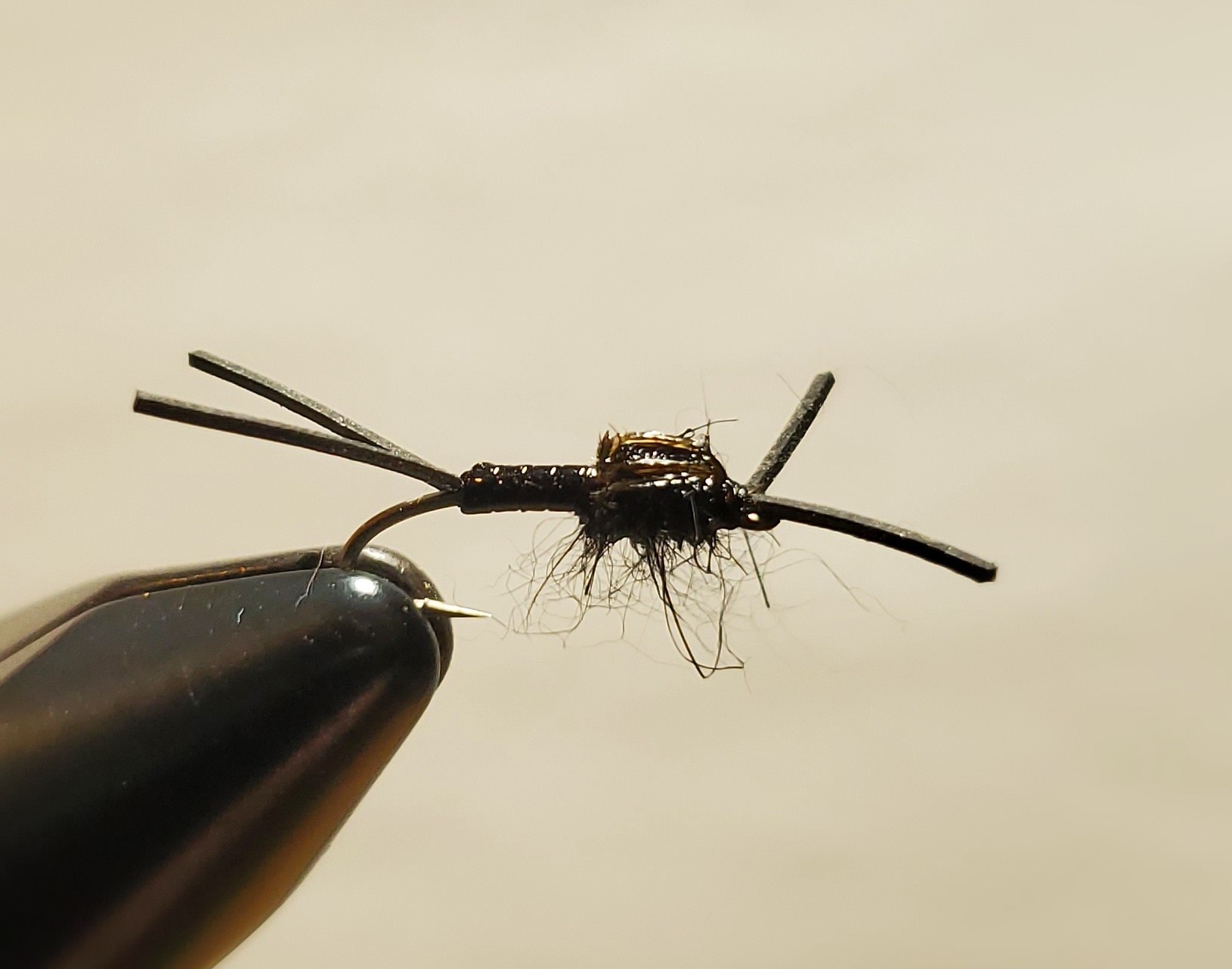
Here is a pattern I like to tie to use this time of year. Tim Flagler’s Little Black Stonefly in size 18. Simple to tie and effective.

Checking out the ice.

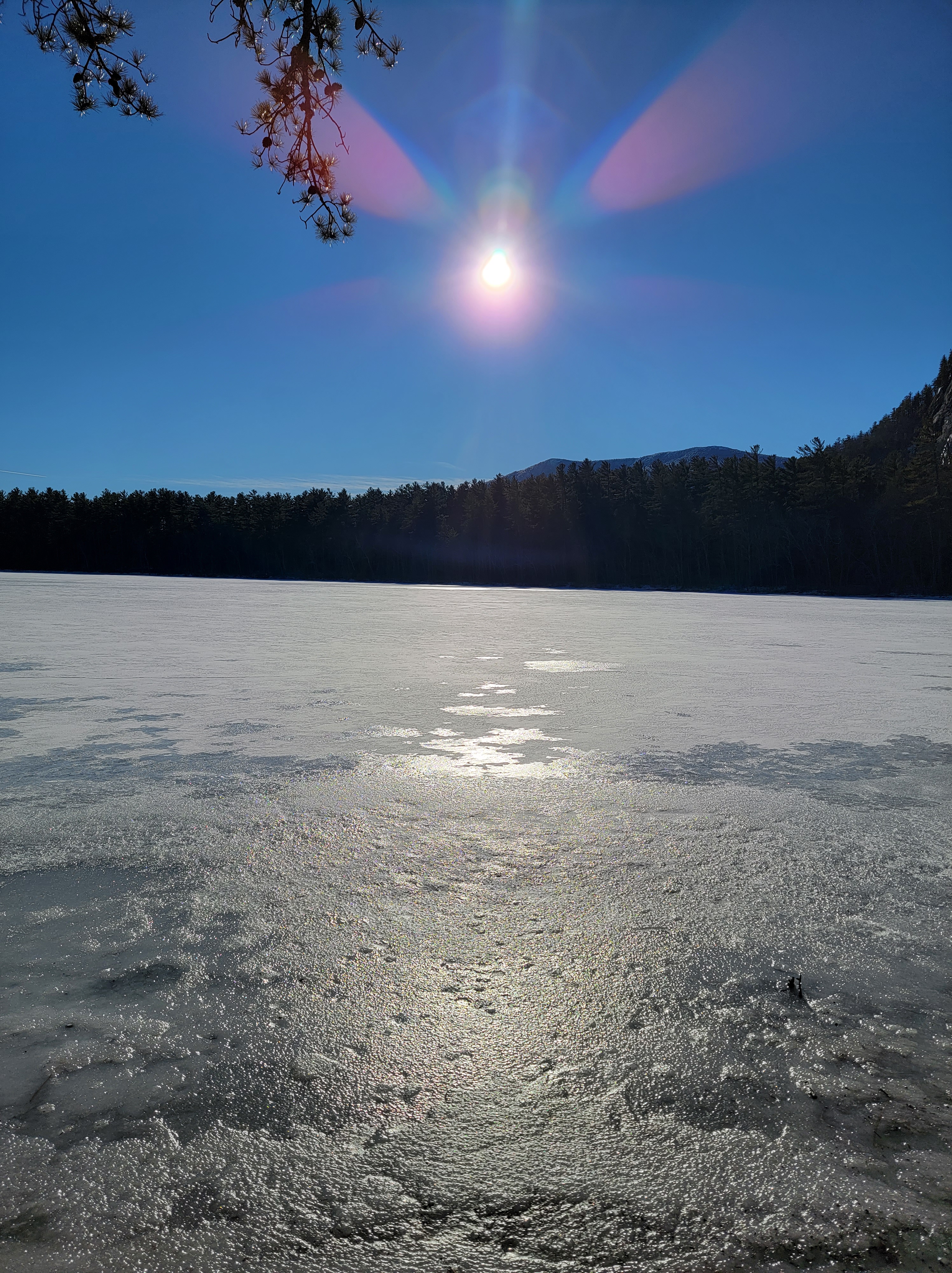
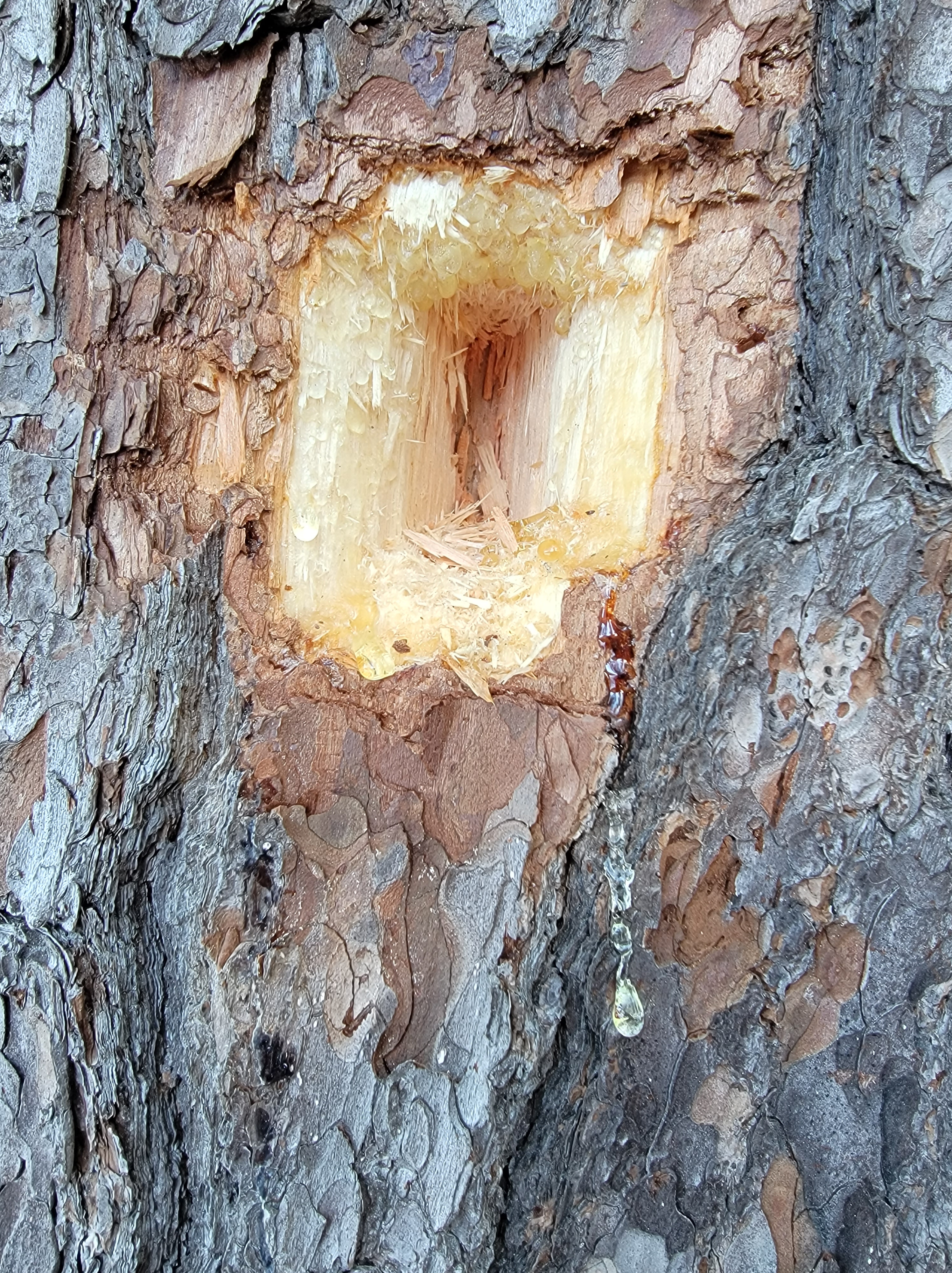
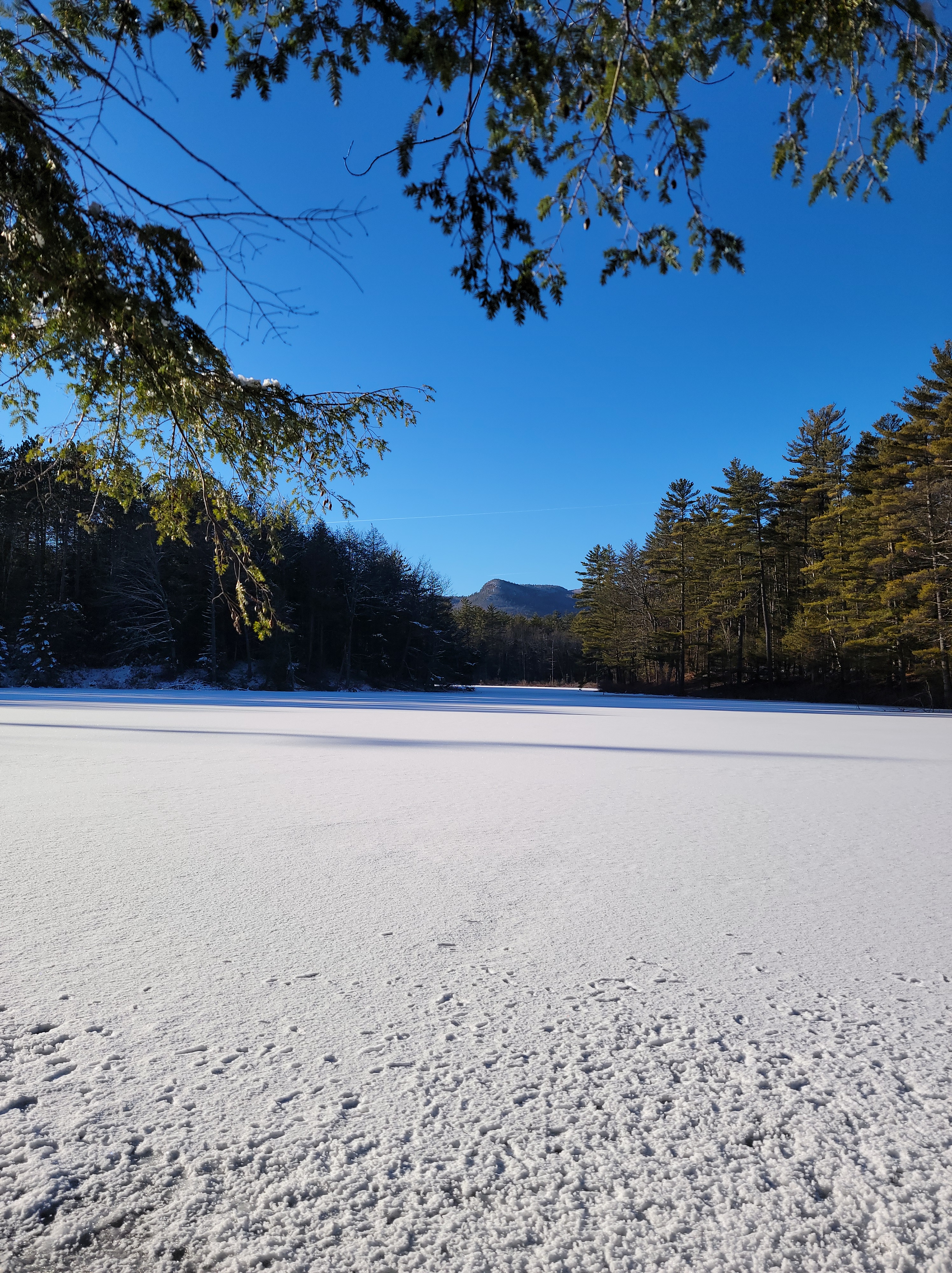
Marylynn and I went for a little walk today. Really just to get out and enjoy the scenery. We checked two ponds for ice fishing potential. The first one “Echo Lake” in North Conway had about three inches of ice. There was a little water showing on the sunny side of the lake. I think I will wait a bit to try that one. We found some evidence of a Pileated Woodpecker looking for dinner in pine tree on the beach. We then went over to “Red Eagle Pond” in Albany. This pond had four inches or more. I might try this pond at the end of the week. This will be a place to do a little kayaking this spring as well. We also found some good access to “The Swift River” for some spring trout.