After learning two new patterns at the Annual Saco Valley Trout meeting at Hobbs’s Brewery, Bridget and I tied up a few.
But having the correct material made all the difference.
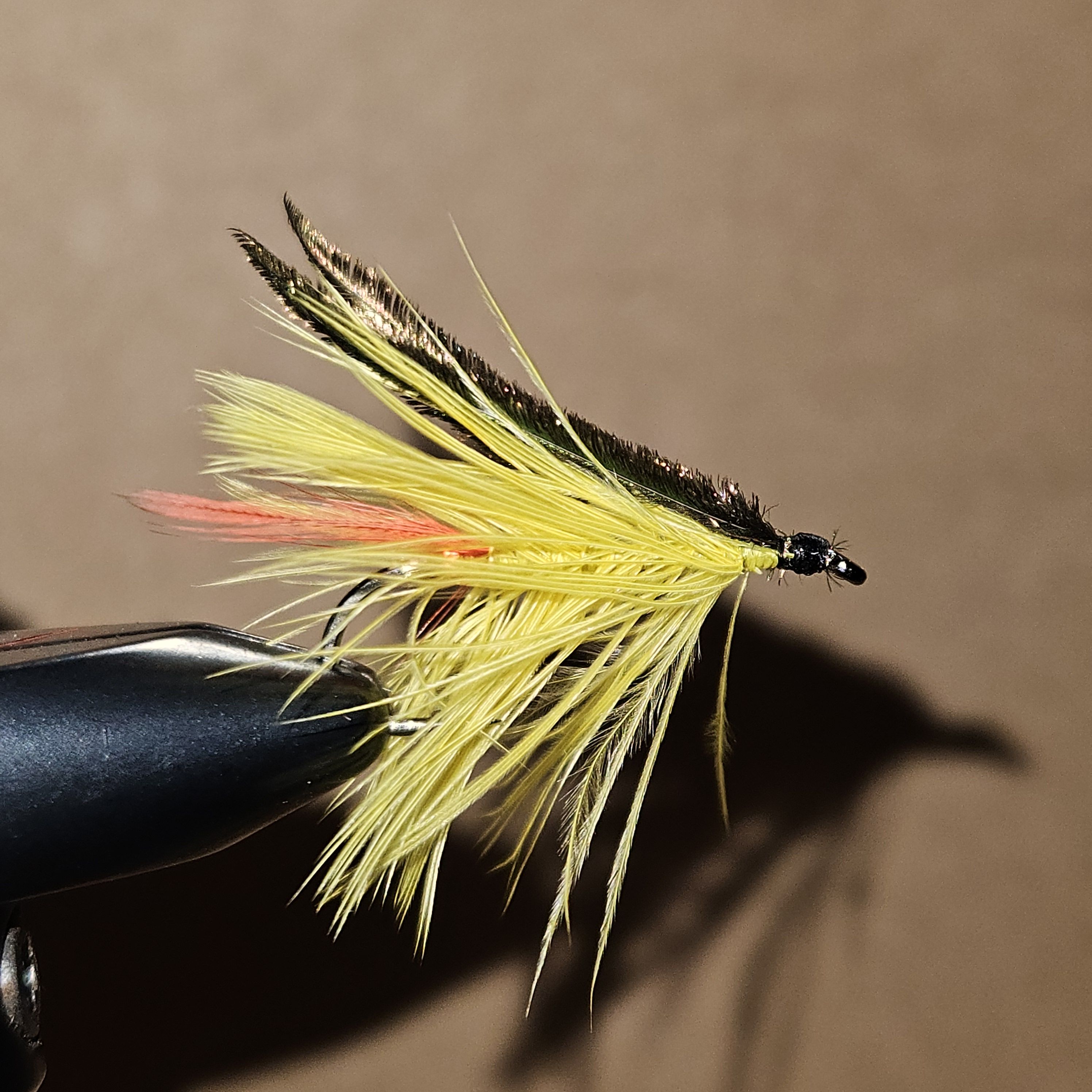
After learning two new patterns at the Annual Saco Valley Trout meeting at Hobbs’s Brewery, Bridget and I tied up a few.
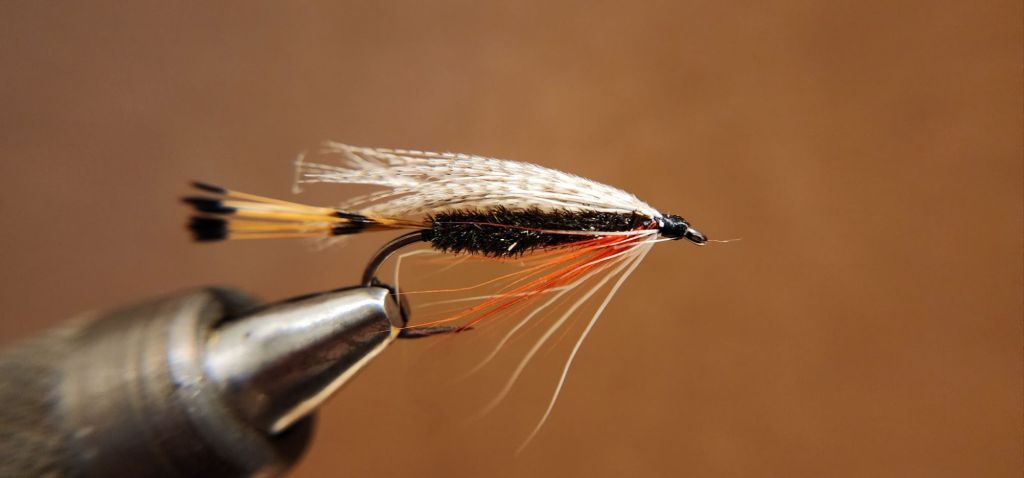
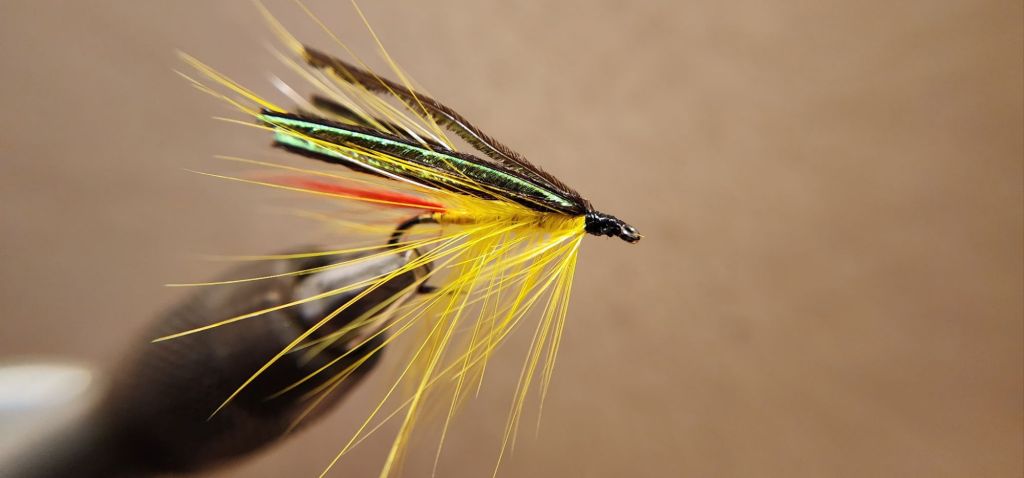
But having the correct material made all the difference.
Tying up some streamers tonight. I hope to swing some of these through some of the deeper holes in the Saco River. Until now, I would have needed snowshoes to get to the river. Warmer temps and some rain are doing a good job melting the snow.
This is the Squirrel and Herl Bugger. It is basically a wooly bugger with a pine squirrel zonker strip wing in place of the marabou tail. This is a size 8, 3x long streamer hook, peacock herl, and an olive-dyed grizzly hackle. I use an olive-dyed pine squirrel zonker strip for the wing. you could use a natural-colored strip as well. The squirrel strip has just the right length fibers for this size fly. This is an easy fly-to-tie so you can tie up quite a few before you finish your beer.
I think this should look like the sculpin and minnows that swim around the rocking bottom of the Saco. Wish me luck.
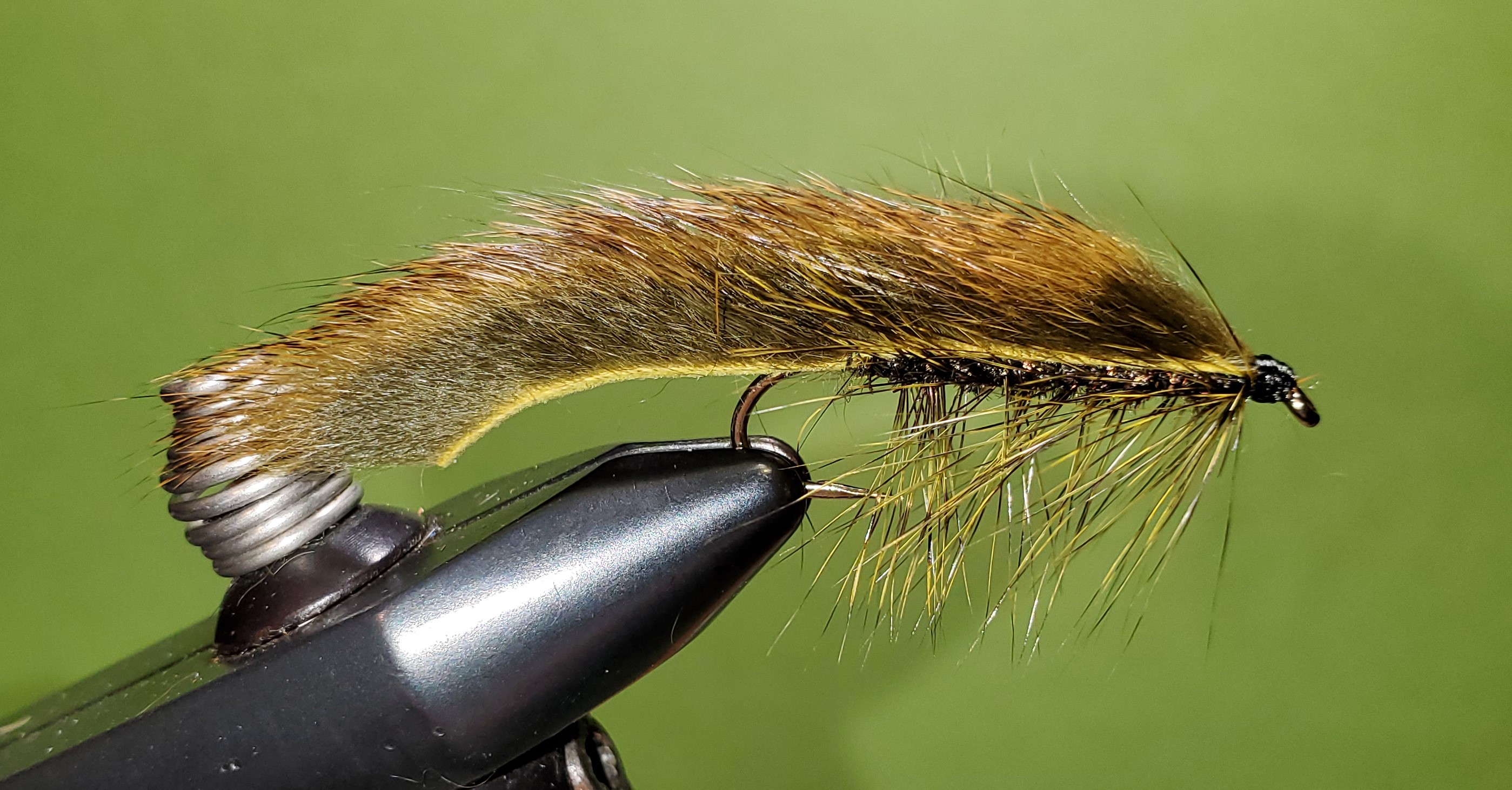
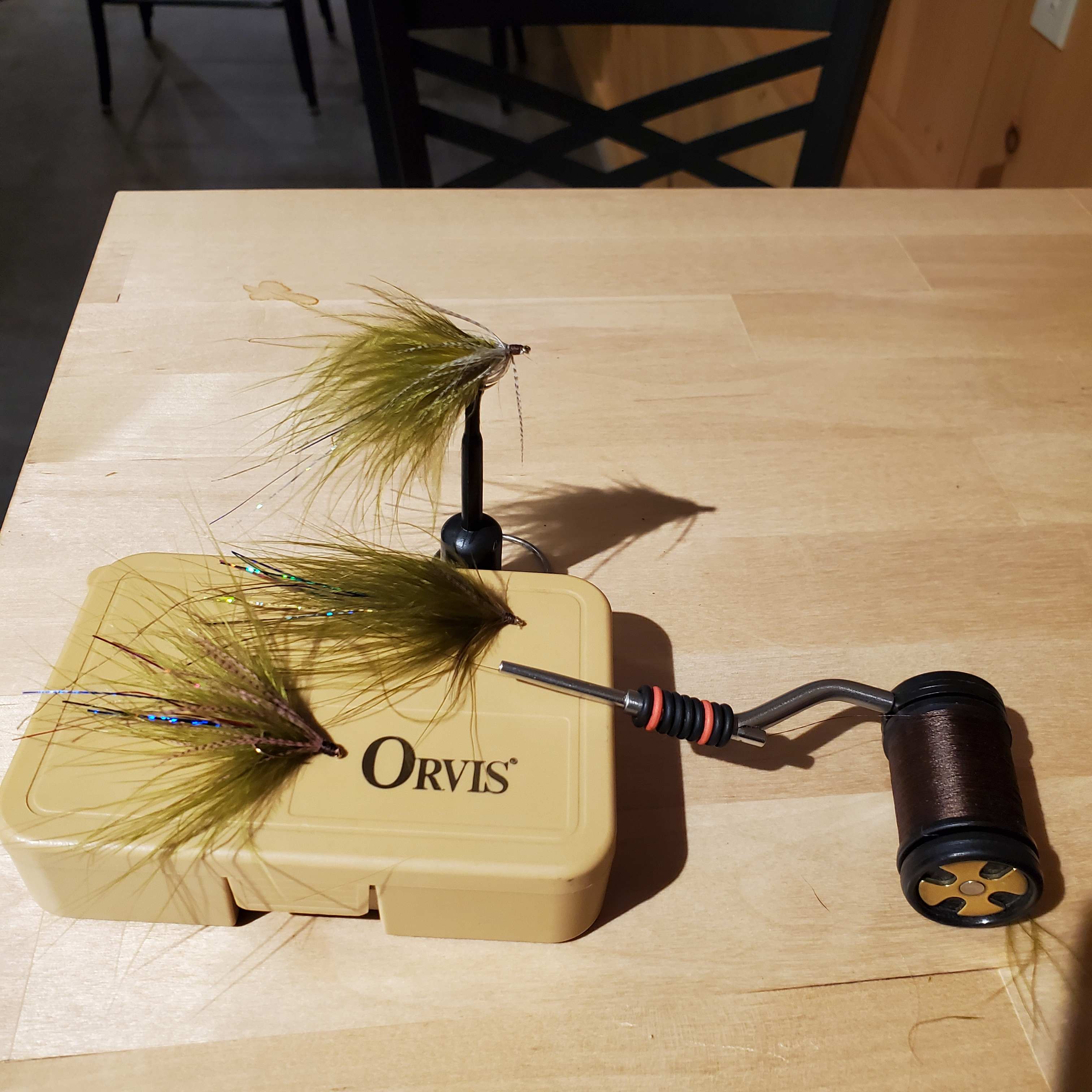
Here is another sample of what we tied at Bugs and Brews. Steve Angers from North Country Angler led the class, and we tied a Jack Gartside Soft Hackle Streamer. We tied this pattern before we tied the Game Changer, which is also tied in the round. I am really enjoying these streamers tied in the round. I had become so stuck tying traditional streamers with a tinsel body and a hair wing, like the Black Nose Dace and Mickey Finn. The Soft Hackle Streamer is a much easier fly to tie than the Game Changer. I think I will tie a bunch up in different colors and sizes to fill my boxes.
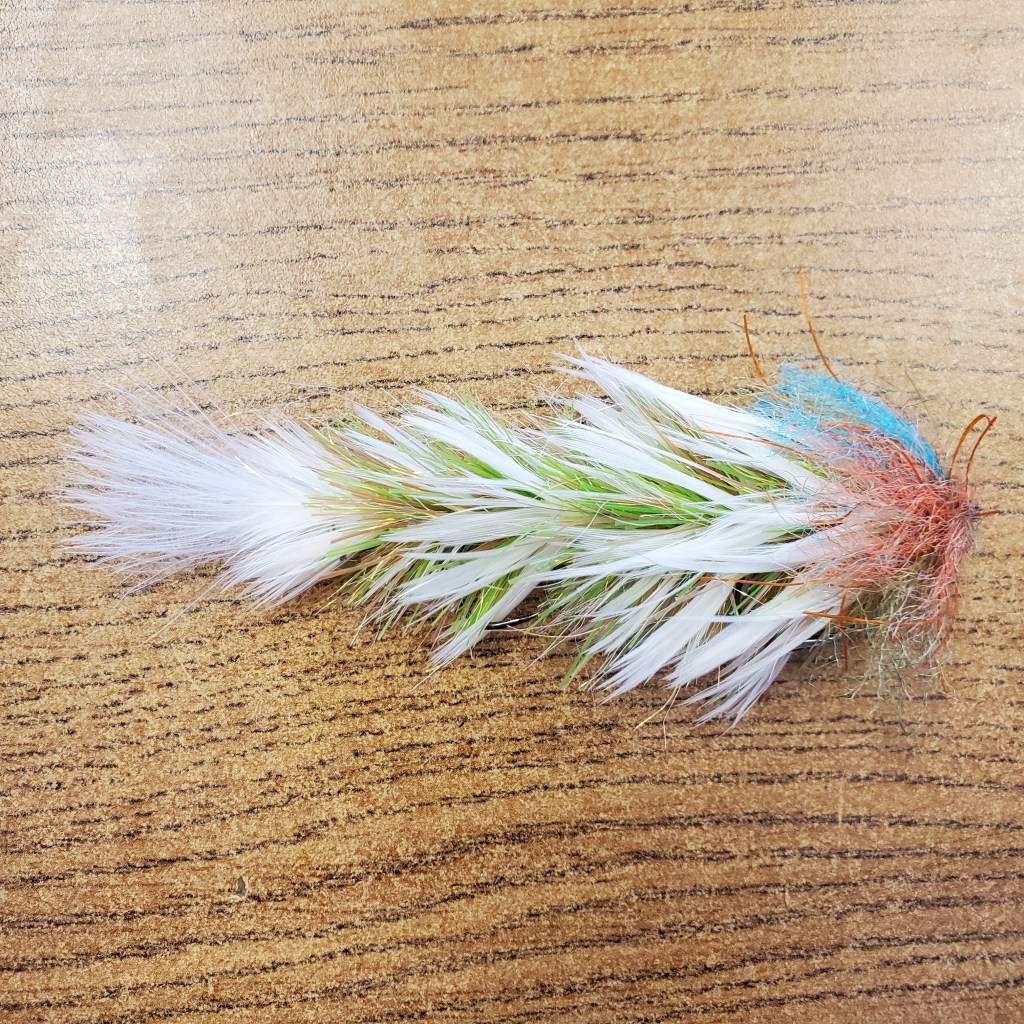
At the Monday Night “Bugs and Brews” at Ledge Brewery here in Intervale, we learn to tie a fly pattern based on the “Game Changer” Justin Laffin a local guide in southern New Hampshire, walked us through his version of the pattern. It is a complicated fly only because there are so many sections and steps. However, the steps are just repeated so once you know the routine it’s not that difficult. I don’t know whether I’ll tie this fly on a regular basis but it certainly was fun to learn to tie it.
The original “Game Changer” was first tied by Blane Chocklett. It is an articulating streamer pattern. Basically, when you tie this pattern it’s four separate flies hooked together with shank sections. Two hooks and two shank sections. It has become more of a style of fly rather than a single pattern. My example here is a bit rough but I got the idea. In a mini version in olive and brown should match the small bait fish in my local mountain streams.

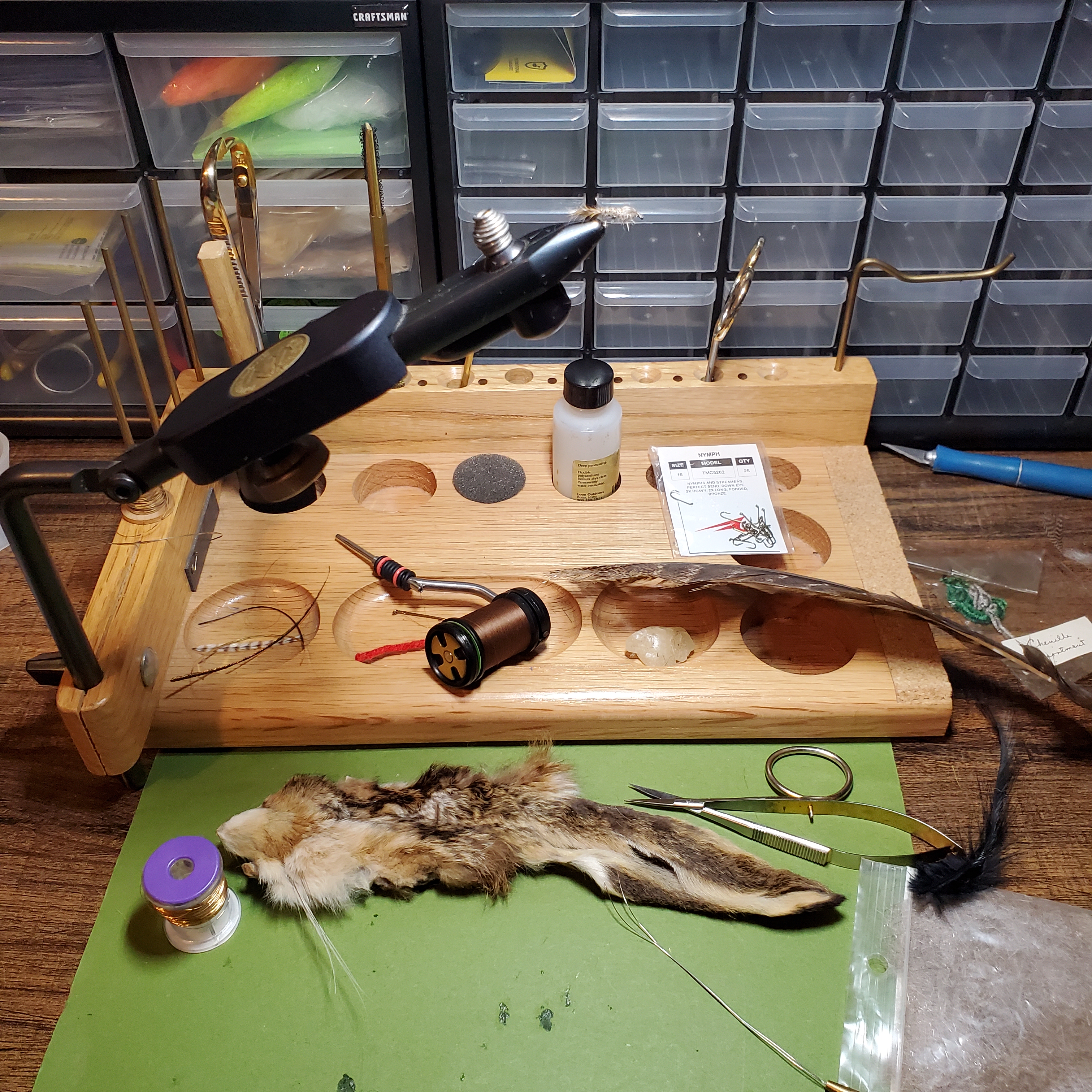
What to do on a cold winter afternoon. Well, I tie flies. I need to fill up the fly boxes for spring. Today I am tying some traditional Gold ribbed hares ear nymphs. In a size 16. I stick to the original recipe except that I use gold wire in place of gold fine tinsel. You do see the wire much until the fly gets wet, but I think it is more durable. I will tie a few of these then maybe a few Prince nymphs or Zug bugs.
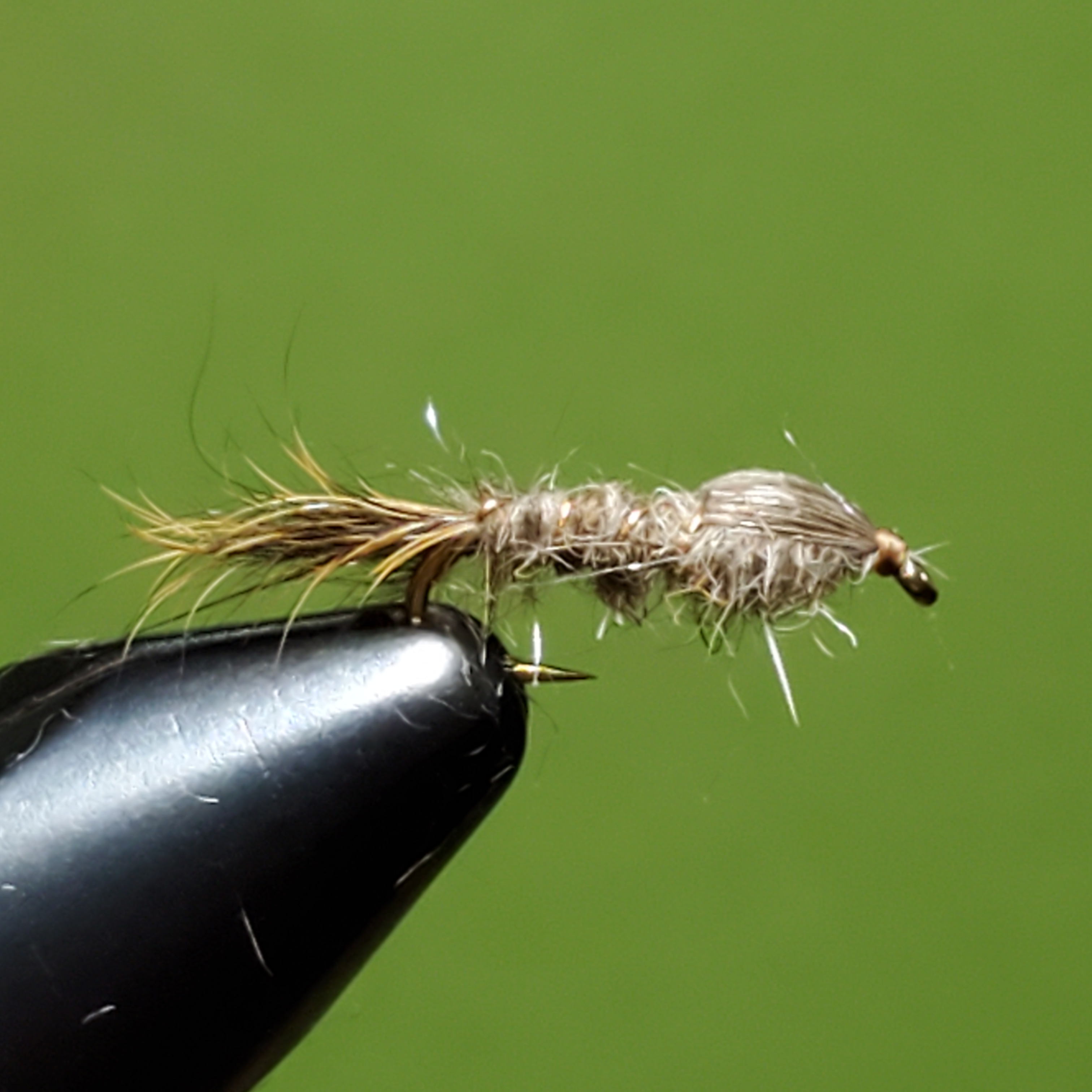
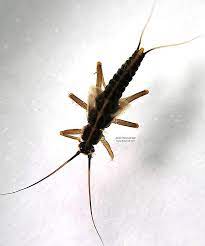
One of the first flies you will see on a trout stream in winter is little black stoneflies. They will crawl out of the water onto a streamside rock in the frigid air. Their dark bodies will absorb heat from the sun and allow this little bug to shed their juvenile skin. Sometimes you can see the small adult stone flies walking around on the white snow. Trout don’t pay much attention to the adults as they are never in the water. The tiny nymph gets the hungry trout’s attention as they migrate along the stream bottom to the streamside rocks. Getting knocked free and tumbling in the current.
Here is a pattern I like to tie to use this time of year. Tim Flagler’s Little Black Stonefly in size 18. Simple to tie and effective.
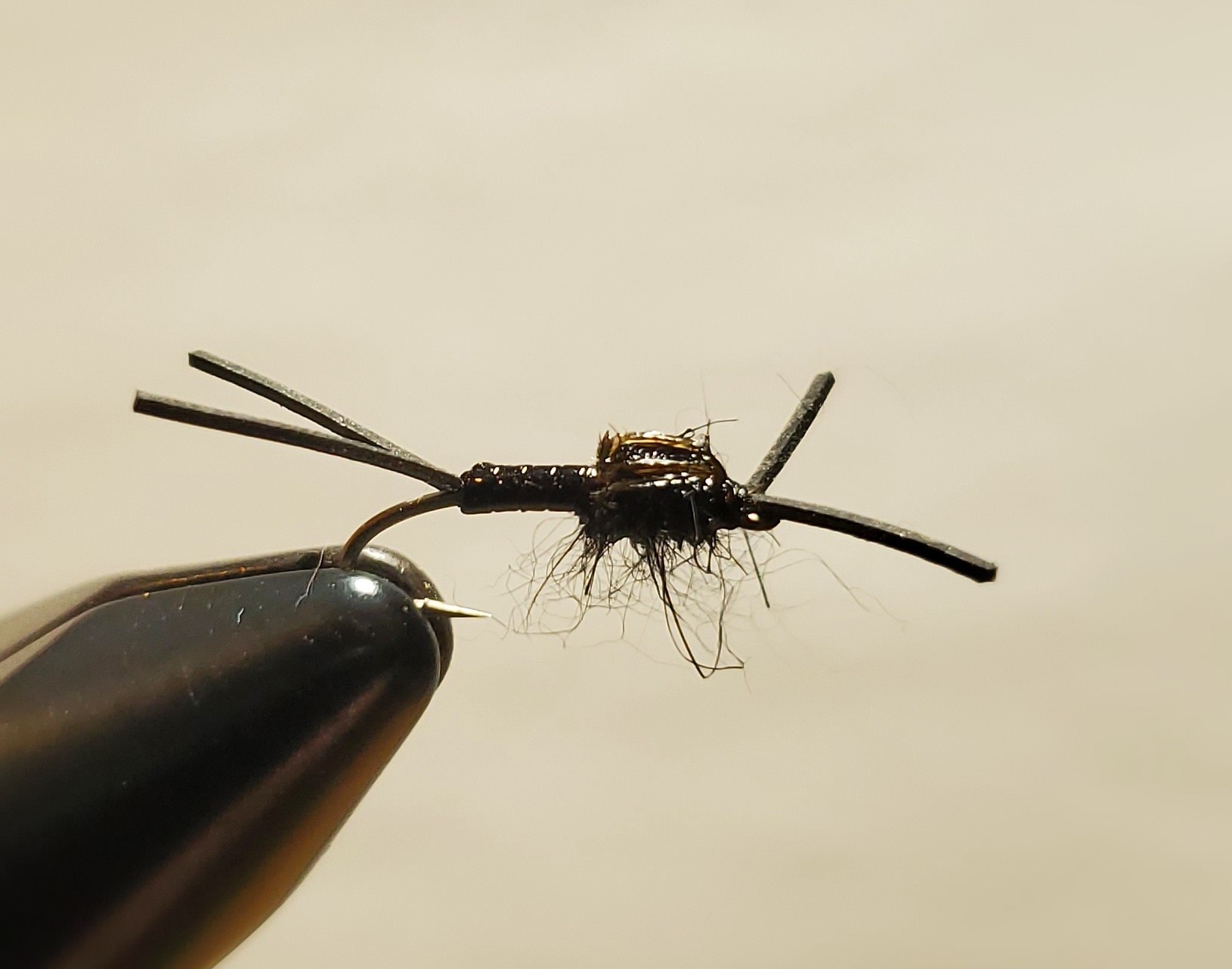
What do you do on a chilly winter night? Why you fill your fly boxes.
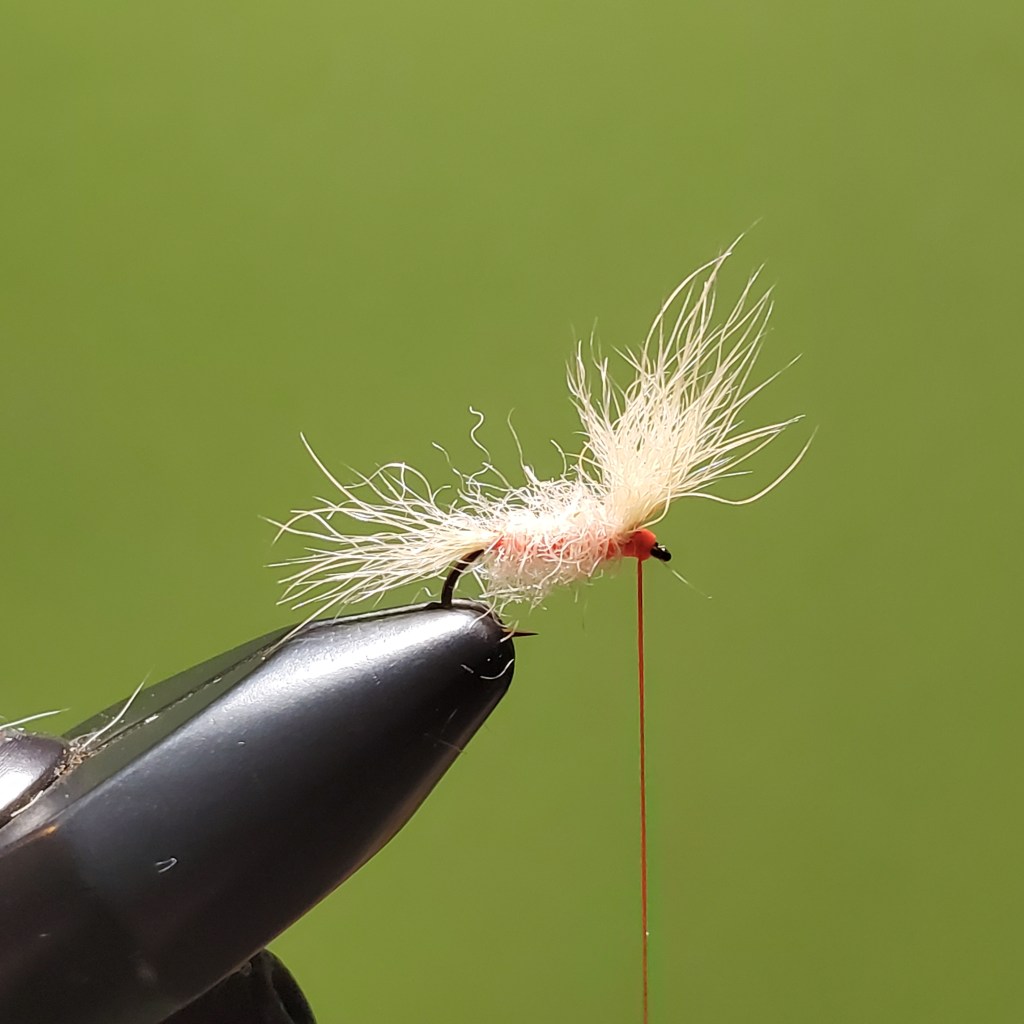
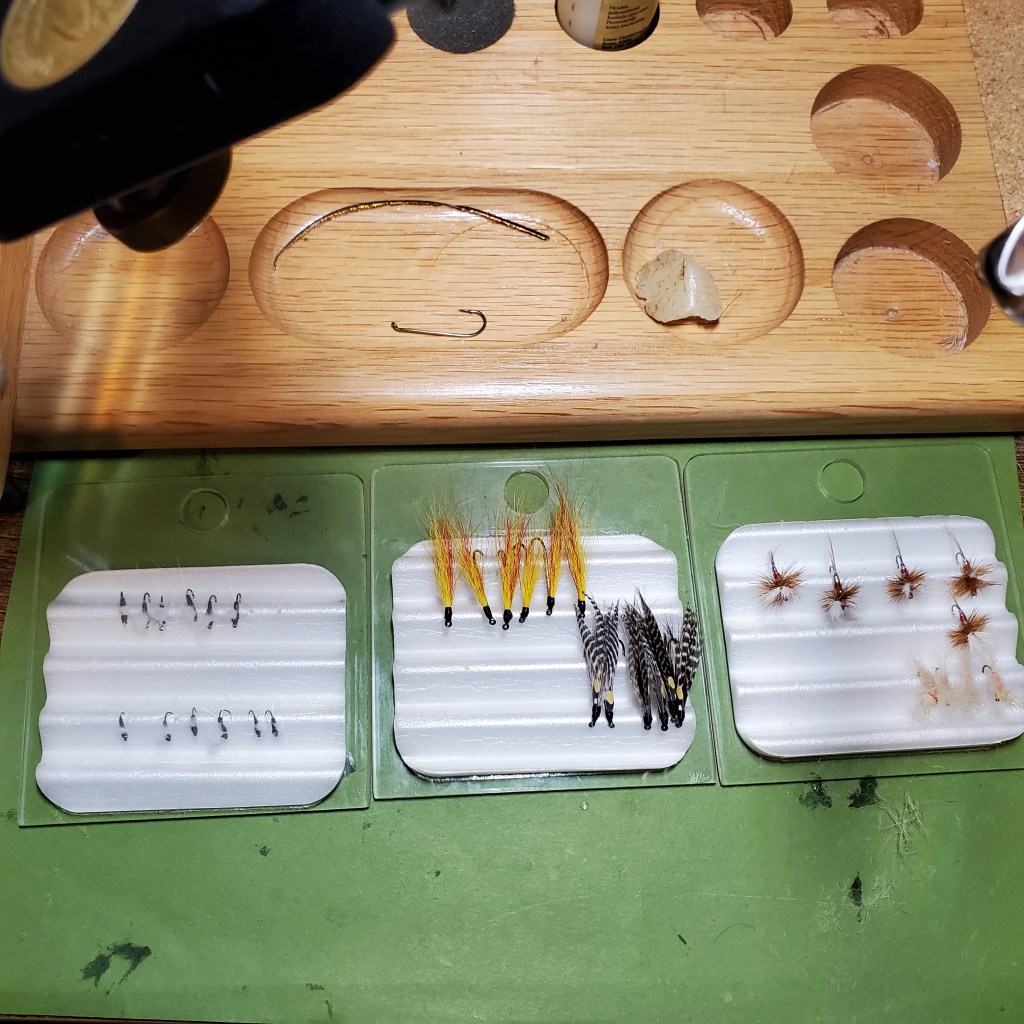
Merry Christmas all. We are down in New Jersey on a whirlwind holiday visit.

It started snowing this morning. Marylynn, Bridget, and I are all home. I thought what better way to stay out of the way than to tie some flies.
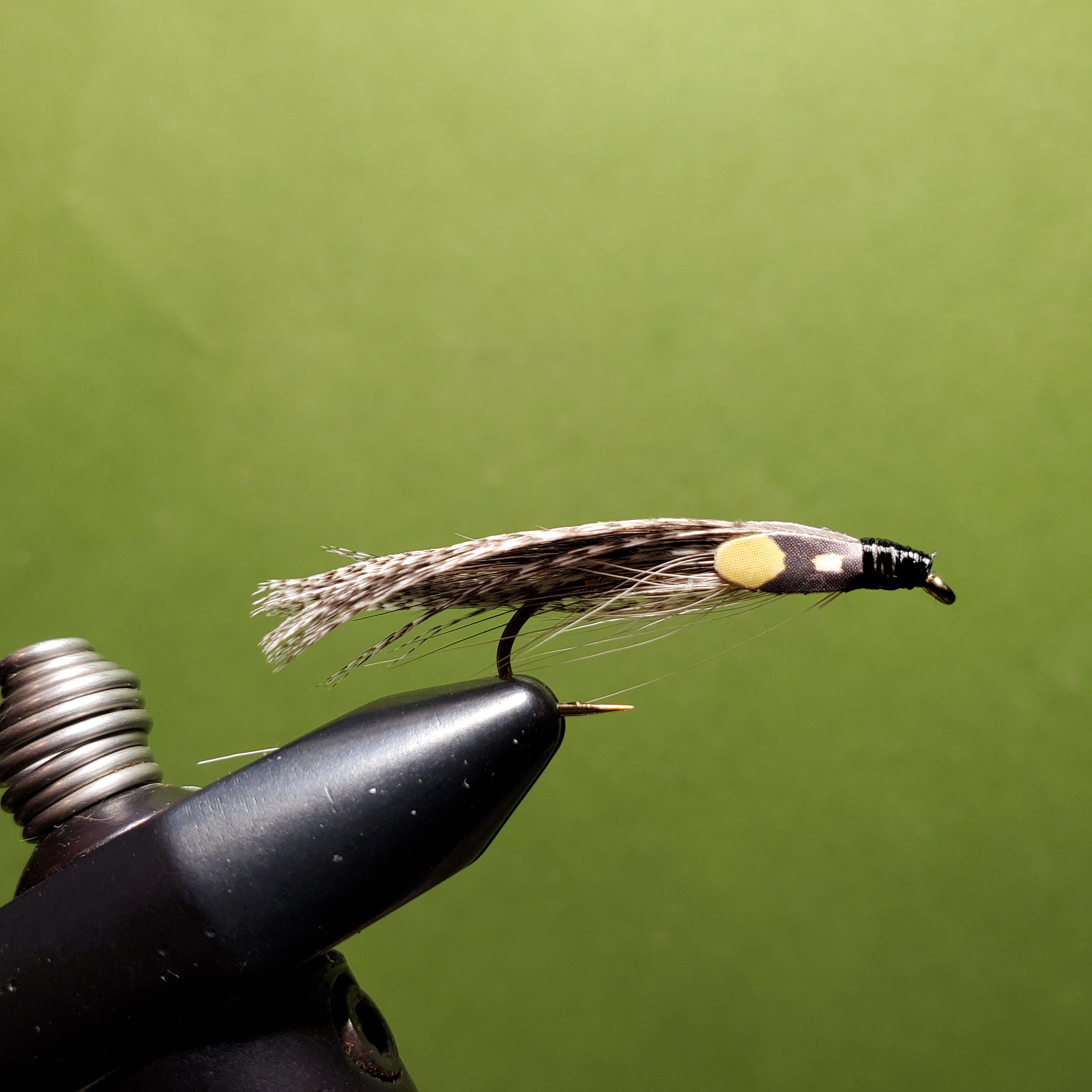
This is a South Branch Chub. Originally tied by Bob Jacklin to fish the South Branch Of the Raritan River in New Jersey. I did really well with this pattern on The Ammonoosuc River in Bretton Woods New Hampshire. I am going to fill my streamer box for next spring. I have used imitation jungle cock cheeks here. I think it will look better with a natural jungle cock. In this article https://www.flyanglersonline.com/flytying/fotw/101998fotw.php , Bob stated that he wanted to call it the Little Brook Trout, but the name was taken. I guess that is why it has worked so well here in New Hampshire. He also said the pattern will work well in ponds I will be giving that a try as well.
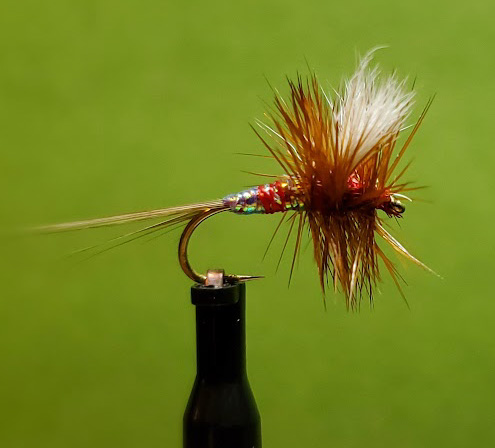
I found that the ticket to catching wild trout here in the White Mountains floating attractor dry flies in every place that can hold a fish. I had multiple double-digit days. My go-to fly was a “Royal Wulff” in size 14. Why? Because I had a bunch in my box. Probably a gift for somebody or they came free with something else I bought. I know I didn’t tie them. I was sitting at my tying desk thinking about what I was going to tie. I have not been very skilled at calf hair wings and I have not tied many flies with a banded body as found in the Royal family of fly patterns. I like to put a spin on things So I decided to tie the “Patriot” a pattern originated by Charlie Meck from Pennsylvania. It uses the same skill as a Royal Wulff. I like that it is highly visible on the water even in choppy broken water. It’s a little rough, but I did okay on the wings the most difficult part for me.
Practice makes perfect. After I tie a couple of dozen of these it will be my go-to fly next season.
 Tap 'n' Trout